
Do you need special slush mix for commercial machines?
Nov 12, 2026
Leave a message
If you’ve ever strolled through a mall, a food court, or a small convenience store on a hot day, you’ve probably seen commercial slush machines churning out those icy, vibrant drinks that feel like a hug for a sweltering day. But if you’re thinking about buying one of these machines for your business, you’ve probably wondered: do you need a special slush mix for commercial machines? I get it—when I first started working as a commercial slush machine supplier, I didn’t realize how big a role the mix plays beyond just flavor. Let’s break this down, no jargon, just real talk from someone who’s been helping business owners get slush right for years.
First, let’s clear up the basic difference between home slush mixes and commercial ones. If you’ve tried using a cheap, generic mix from a grocery store in your single tank slush machine, you might’ve run into problems: the slush is too watery, it doesn’t stay frozen, or the machine clogs up so bad you’re spending half your shift taking it apart. That’s because commercial machines aren’t just scaled-up versions of the home ones—they work differently. They rely on precise freeze-thaw cycles, agitation (that constant churning you hear), and consistent viscosity to turn liquid into that perfect, scoopable slush. Generic mixes don’t have the right balance of sugar, stabilizers, and anti-freeze agents to play nice with that industrial-grade hardware.
Let’s talk about those key ingredients for a sec. A good commercial slush mix has a specific sugar content—usually between 12 and 18%—that keeps the freezing point just low enough so the machine can turn part of the mix to ice without freezing solid. Generic mixes often have too much sugar, which makes the slush turn into a slushy block that the machine’s agitator can’t move. Or too little, and everything melts before a customer even takes it to their table. Then there are stabilizers like Guar gum or xanthan gum—these keep the ice crystals small and evenly dispersed, so your slush doesn’t separate into a puddle at the bottom 10 minutes after you pour it. Home mixes almost never have these, because they’re designed for tiny countertop slush machines that don’t need that kind of consistency.
Wait, but what if you’re using a fast freeze slush machine? Those are the ones that get cold way quicker than standard models, right? They need an even more specific mix. Because their cooling systems are more powerful, a mix that works for a regular machine might freeze too fast on the outside and leave a slushy mess in the middle. I’ve had customers tell me they wasted weeks trying to use a generic mix in their fast freeze slush machine, and by switching to a commercial mix made for quick-freeze units, their yield went up by 30%—no exaggeration. That’s the thing: the machine type doesn’t just affect how much slush you make; it dictates exactly what mix you need to pair with it.
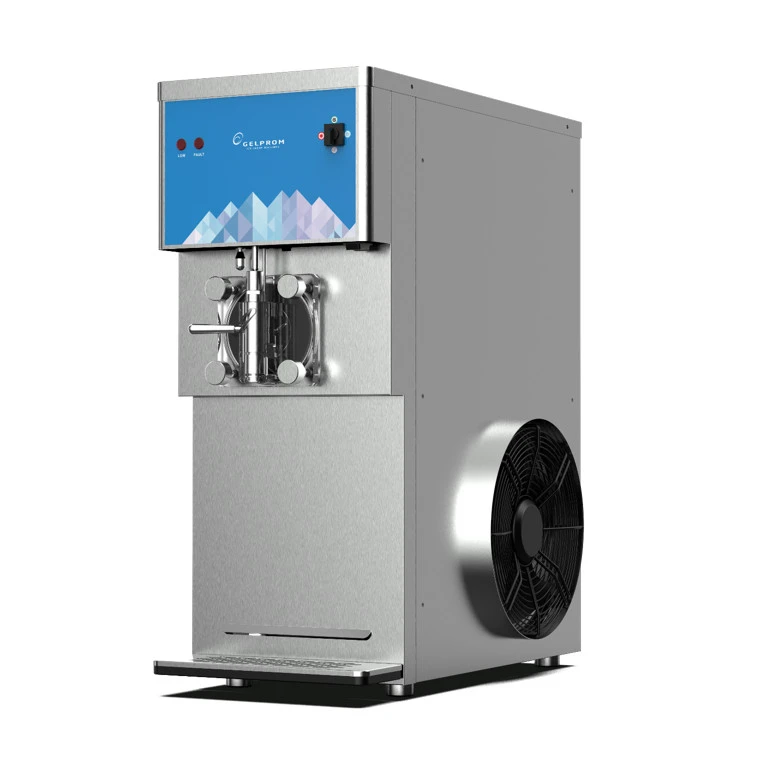
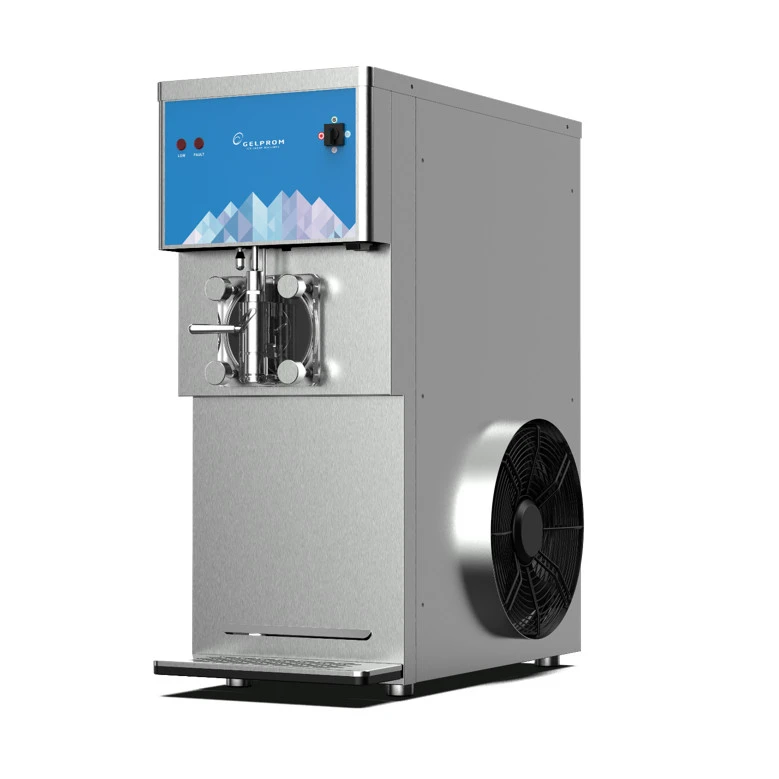
Let’s cover different machine types because that’s where most people get confused. If you’ve got a small operation, a countertop slush machine might seem like a no-brainer, and you might think you can use any mix. But even countertop models—while smaller than industrial slush machine units—are still commercial-grade, so their mix needs match that. A generic mix will make the countertop machine work overtime, leading to higher energy bills and more repairs.
For double slush machine setups, which let you run two flavors at once, consistency is even more important. If one flavor uses a different sugar or stabilizer level than the other, one might freeze faster than the other, leading to uneven slush or one tank clogging up. Commercial mixes are formulated to work across tanks, so both flavors churn at the same rate, keeping your display looking full and your customers happy.
Now, let’s address the big “wait, can’t I just make my own mix?” question. I’ve seen a lot of food truck owners or small café folks try to cut corners by mixing their own syrup and water. It makes sense—saves money, right? But here’s the catch: most of the time, homemade mixes don’t have the right balance for commercial machines. I had a food truck client last year who tried making his own, and within a week, his double slush machine was seizing up. The homemade mix had too much corn syrup, which created crystals that got stuck in the agitator. He ended up spending $800 on a repair, which was way more than he would’ve spent on a month’s worth of commercial mix. Sure, mixing your own might work for a home experiment, but for a business, downtime is money lost. That’s why investing in the right mix isn’t just about flavor—it’s about protecting your machine and your profits.
Another thing I see all the time: people using old mix. Slush mixes have a shelf life, and if you let them sit around for months, the stabilizers break down. That’s when you get that watery slush or separation. Commercial mixes are formulated to stay stable for 6-12 months, depending on storage, but once you open a container, you should use it within a month. Storing it in a cool, dry place (not next to the machine’s heat vent) helps too. If your slush is turning out wrong, the first thing to check isn’t your machine—it’s your mix’s expiration date and how you stored it.
Let’s talk about flavor too. Wait, does a special mix affect the taste? Yeah, in a way. Generic mixes often use artificial flavors that can taste flat once frozen, while commercial mixes use flavorings that hold up in a slush. But even more than that, the right mix helps the flavor distribute evenly. If the mix is off, the first sip might be too sweet, the last too tart—no one wants that. Commercial mixes are calibrated to make every bite taste consistent, which keeps customers coming back.
Now, let’s circle back to machine types because it’s all connected. If you’re running a single tank slush machine for a small kiosk, a good commercial mix will work perfectly, no fancy adjustments needed. If you’ve got an industrial slush machine pumping out slush for a large events space or chain restaurant, you need a mix that’s designed for high-volume, continuous use. Those mixes are thicker, have extra stabilizers to handle constant churning, and are made to keep up with the machine’s output. Using a standard mix in an industrial unit will lead to overworked parts, frequent clogs, and lower slush quality—basically a headache you don’t need when you’re trying to serve a crowd.
I should also mention that some people think “special mix” is just a marketing gimmick, but for commercial machines, it’s a necessity. The science here is real: commercial slush machines have a specific evaporator temperature (usually around -2°C to -4°C) and agitation speed (about 30-60 rotations per minute, depending on the machine) that are engineered to work with a mix of a certain density and freezing point. Generic mixes don’t align with those specs, so the machine can’t do its job properly. It’s like putting regular gas in a diesel truck—it might run, but it’s not going to perform well, and it’ll break down faster.
Wait, let’s throw in a quick example of how this plays out for a business. Say you own a convenience store, and you invested in a countertop slush machine to add a new revenue stream. You grab a cheap generic mix from your local grocery store, and for the first two days, it works okay. But by day three, the slush is too watery, and your machine is making a loud grinding noise. You call a repair tech, who tells you the agitator is worn out because the generic mix was too thin and didn’t give the machine enough resistance. The repair is $500, and you lost two days of slush sales while the machine is fixed. That’s a way bigger cost than just buying the right commercial mix from the start.
On the flip side, a customer of mine who runs a movie theater switched to a commercial mix made for their double slush machine a year ago. They told me their slush sales went up 25% because the slush was consistently the right texture, and they had 20% less machine downtime. That’s not a coincidence—it’s the mix doing its job.
Now, I know what some of you are thinking: “I don’t want to spend more on mix.” But let’s do the math. A gallon of commercial slush mix makes about 5 servings (a 16-oz cup), and it costs around $8-$10. A generic mix might be $5 a gallon, but it only makes 3 servings, and you’ll have more machine repairs and wasted slush. So per serving, the commercial mix is actually cheaper. Plus, higher-quality slush means happier customers, who will buy more from you. It’s a small investment that pays off in repeat business.
Let’s also clear up a myth: you don’t need a different mix for every flavor. Most commercial mixes come in base forms—fruit, cola, tropical, etc.—and you can add your own flavor syrups to customize. That’s perfect if you want to offer unique flavors for your business, without having to hunt for a special mix for each one. The base mix handles the texture and freezing, and the syrup adds the taste. That’s a win-win for small businesses that want to stand out without extra costs.
So, to answer the original question: yes, for commercial slush machines, you absolutely need a special slush mix. Not because someone is trying to upsell you, but because these machines are designed for that specific mix’s chemical and physical properties. Using the wrong mix will lead to poor slush quality, machine damage, lost sales, and extra headaches. It’s the foundation of a good slush program.
Now, if you’re in the market for a commercial slush machine and want to get the right mix to go with it, we’ve got you covered. Whether you’re looking for a single tank slush machine for a small space, a double slush machine for two flavors, a fast freeze slush machine for quick turnover, or even an industrial slush machine for high-volume events, we can help you pair the right equipment with the right mix. And if you’ve got questions about what mix works with your specific machine, our team is here to walk you through it—no sales pitch, just straight talk.
If you’re ready to upgrade your slush setup or learn more, reach out to our team to discuss your commercial slush machine needs and find the perfect mix to match.
- Smith, J. (2022). Food Service Equipment Maintenance for Small Businesses. Culinary Press.
- Lee, S. (2021). The Science of Frozen Beverage Mixes and Machine Compatibility. Journal of Food Technology, 45(3), 112-120.
- Patel, R. (2023). Profitability of Frozen Drink Programs in Retail Settings. Hospitality Business Review, 18(1), 67-75.
- Thompson, K. (2020). Stabilizer Systems in Frozen Beverages: Impact on Texture and Consistency. Food Hydrocolloids, 102, 105678.